changes in speech or coordination, progressive weakness.
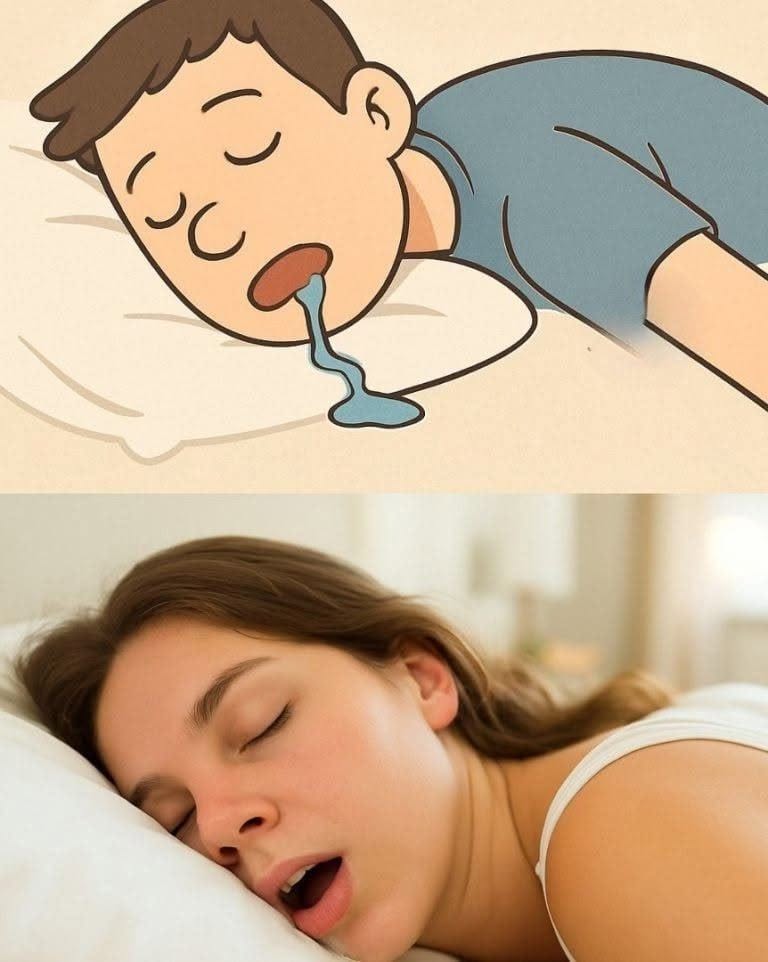
5. Sleep Apnea or Obstructive Breathing Issues
Why: Breathing through the mouth during sleep—common in sleep apnea—can cause drooling. It’s often a sign of obstructed nasal or throat airways.
Signs: Loud snoring, gasping for air at night, daytime fatigue, morning headaches.
6. Cardiovascular or Neurological Events (Stroke, TIA)
Why: A blockage or bleed in the brain can disrupt muscle control, including swallowing and facial muscles. This can lead to one-sided drooling during sleep.
Signs: Sudden facial drooping, arm weakness, speech difficulty, confusion, dizziness.